Chicken Pesto Caprese Pasta Salad: 5 Amazing Vibrant Servings

Posted on March 7, 2026

Difficulty

Prep time

Cooking time

Total time

Servings

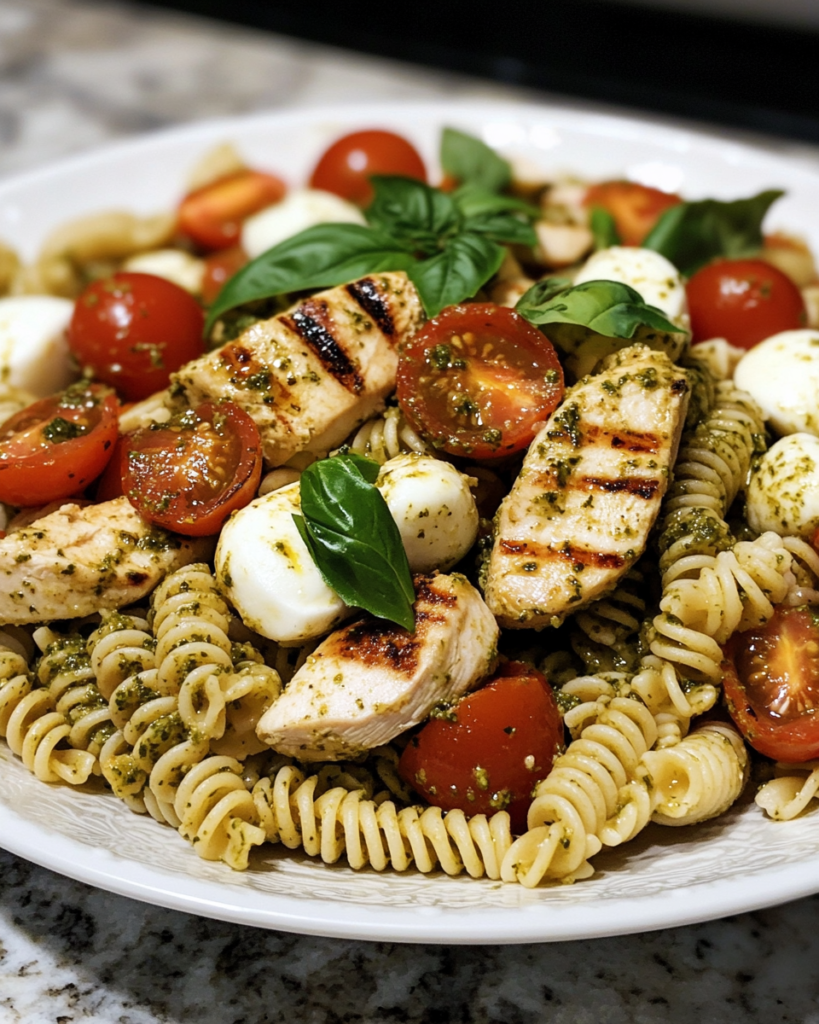
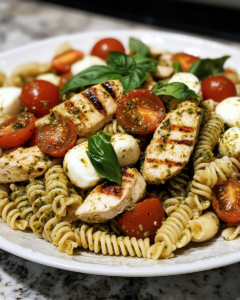
Chicken Pesto Caprese Pasta Salad brings together tender chicken, fragrant basil pesto, juicy tomatoes, creamy mozzarella, and pasta in a dish that feels fresh yet satisfying. Inspired by the classic Italian Caprese combination, this salad combines bright ingredients with hearty protein and pasta for a balanced meal that works during warm afternoons, casual gatherings, or relaxed dinners.

The character of Chicken Pesto Caprese Pasta Salad comes from contrast. Sweet cherry tomatoes burst against soft mozzarella, while herb-rich pesto coats each piece of pasta with basil aroma and olive oil richness. Grilled or roasted chicken adds substance and turns the salad into a filling main dish rather than a simple side.

Another appealing feature is how well the components hold their texture after mixing. Pasta absorbs the pesto while still remaining tender, and the fresh ingredients maintain color and flavor even after chilling. The result is a bowl full of lively color and layered taste.

This dish also fits busy schedules. Much of the preparation can happen ahead of time, allowing the salad to rest in the refrigerator until serving. With a handful of wholesome ingredients and simple preparation steps, Chicken Pesto Caprese Pasta Salad offers a dependable option for meals throughout the week.

Ingredients Overview
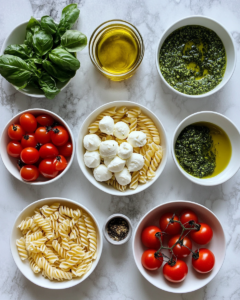
A successful Chicken Pesto Caprese Pasta Salad relies on fresh ingredients that balance richness, acidity, and texture. Each component plays a distinct role in the final dish.

Pasta forms the base of the salad. Short pasta shapes such as rotini, fusilli, or penne work particularly well because their ridges hold pesto effectively. These shapes trap sauce within their curves, giving every bite a balanced coating of flavor.

Cooked chicken provides protein and substance. Grilled chicken breast offers a lightly charred flavor that pairs well with pesto, though roasted or poached chicken also works nicely. Leftover chicken can be used as long as it remains moist and well-seasoned.

Basil pesto delivers the central flavor profile. Traditional pesto contains basil, garlic, pine nuts, olive oil, and Parmesan cheese. The sauce provides herbal depth and a smooth coating that binds the salad ingredients together.

Cherry or grape tomatoes add brightness and natural sweetness. Their small size means they require only a quick slice in half, releasing juices that mix lightly with the pesto and create a fresh contrast to the pasta.

Fresh mozzarella brings creamy softness to the salad. Small mozzarella pearls are convenient, though larger mozzarella balls can be cut into bite-size pieces. The mild dairy flavor complements the herbaceous pesto without overwhelming it.

Olive oil helps loosen the pesto slightly so it spreads evenly through the pasta. A small drizzle also contributes a smooth texture and mild fruitiness.

Fresh basil leaves reinforce the herbal notes of the pesto while adding fragrance and visual appeal. Torn leaves work better than chopped ones because they maintain structure and release aroma gradually.

A splash of balsamic glaze or balsamic vinegar adds gentle acidity that brightens the salad and ties the ingredients together.

Salt and freshly ground black pepper round out the seasoning. Since pesto and mozzarella already contain salt, only a modest amount is required to balance the flavors.

Step-by-Step Instructions

Begin by cooking the pasta in a large pot of salted water according to the package directions. The pasta should reach an al dente texture, meaning it remains tender while still offering a slight bite. This structure prevents the pasta from becoming overly soft after mixing with the dressing.
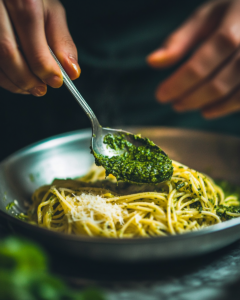
Once cooked, drain the pasta and rinse briefly with cool water. This step stops the cooking process and lowers the temperature so the pesto retains its fresh flavor rather than warming and separating.

Spread the drained pasta on a large tray or bowl and allow it to cool completely. A cooler base prevents the mozzarella from softening too much during mixing.

While the pasta cools, prepare the chicken. If using grilled chicken breast, slice it into bite-size strips or cubes. The pieces should be similar in size to the pasta to maintain a balanced texture throughout the salad.

In a large mixing bowl combine the cooled pasta and sliced chicken. Add halved cherry tomatoes and mozzarella pearls.

Next add the pesto. Spoon the pesto over the mixture and drizzle a small amount of olive oil on top. Using a large spoon or spatula, gently fold the ingredients together until the pasta and chicken are evenly coated.

Taste the mixture and adjust the seasoning with salt and freshly ground black pepper if needed. Since pesto already contains garlic and cheese, additional seasoning should remain subtle.

Tear several fresh basil leaves and sprinkle them over the salad. Toss lightly so the leaves distribute throughout the bowl.

For a finishing touch, drizzle a small amount of balsamic glaze across the top of the salad. The gentle acidity adds brightness that balances the richness of the pesto and mozzarella.

Cover the bowl and place it in the refrigerator for about 30 minutes before serving. This resting period allows the flavors to blend while keeping the ingredients fresh and vibrant.

Before serving, stir the salad once more and add an additional drizzle of olive oil if the pasta has absorbed some of the dressing.

Tips, Variations & Substitutions

Chicken Pesto Caprese Pasta Salad adapts easily depending on ingredient availability and personal preference.

For deeper flavor, grilling the chicken with light seasoning before slicing can introduce a subtle smoky note that complements the pesto. Roasted chicken seasoned with garlic and olive oil also works well.

Whole wheat pasta provides a slightly nutty flavor and additional fiber while maintaining the same structure as traditional pasta.

For added vegetables, sliced cucumbers, roasted red peppers, or baby spinach can be mixed into the salad. These ingredients add freshness without competing with the central basil flavor.

If mozzarella pearls are unavailable, fresh mozzarella packed in water can be cut into cubes. Burrata can also appear in small pieces for a richer texture.

Store-bought pesto works well for convenience, though homemade pesto offers a brighter herbal aroma. When preparing pesto at home, blending fresh basil with olive oil, Parmesan cheese, pine nuts, and garlic creates a classic version.

For additional acidity, a squeeze of fresh lemon juice can replace balsamic glaze. This adjustment produces a lighter citrus tone.

Vegetarian versions can simply omit the chicken and add grilled zucchini or chickpeas for substance.

Serving Ideas & Occasions

Chicken Pesto Caprese Pasta Salad fits many occasions due to its balanced combination of protein, pasta, and fresh ingredients.

During warm weather meals, it works beautifully as a chilled main dish served alongside crusty bread or focaccia. The refreshing ingredients pair naturally with light beverages such as sparkling water with citrus.

At picnics or potlucks, the salad travels well and holds its structure even after several hours in a cooler. Its colorful ingredients also create visual appeal when presented in a large serving bowl.

For weekday lunches, a portion packed in containers provides a convenient meal that remains flavorful even when eaten cold.

The salad can also accompany grilled dishes such as vegetables, seafood, or additional chicken. The herbaceous pesto dressing pairs especially well with simple grilled foods.

Because the preparation requires minimal reheating or last-minute cooking, the dish suits gatherings where relaxed serving and shared plates are preferred.

Nutritional & Health Notes

Chicken Pesto Caprese Pasta Salad contains a balanced mixture of protein, carbohydrates, and fats. Chicken breast contributes lean protein that supports muscle maintenance and provides lasting satiety.

Pasta supplies energy through complex carbohydrates, which help sustain activity throughout the day. Choosing whole grain pasta can increase fiber intake.

Fresh tomatoes contribute vitamin C, potassium, and natural antioxidants. Their bright acidity also balances the richer elements in the salad.

Mozzarella adds calcium and protein while maintaining a mild flavor that complements the other ingredients. Using fresh mozzarella keeps the texture soft without heavy processing.

Olive oil in the pesto provides monounsaturated fats commonly associated with Mediterranean-style eating patterns. These fats support heart health when consumed in moderate amounts.

Fresh basil offers aromatic oils and plant compounds that contribute both flavor and nutritional value.

When combined with vegetables or a light green salad, this dish can serve as part of a balanced meal that provides a variety of nutrients.

FAQs

Can Chicken Pesto Caprese Pasta Salad be prepared in advance?

Yes. This salad often tastes even better after a short resting period because the pesto distributes evenly through the pasta. Preparing it a few hours before serving allows the flavors to blend while keeping the ingredients fresh. Store the salad in a covered container in the refrigerator. Before serving, stir gently and add a drizzle of olive oil if the pasta has absorbed some of the dressing.

Which pasta shape works best for this salad?

Short pasta shapes such as rotini, fusilli, or penne work particularly well. Their ridges and curves hold pesto effectively, allowing the sauce to cling to the pasta rather than settling at the bottom of the bowl. This structure provides balanced flavor throughout the dish and keeps the ingredients evenly coated.

Is homemade pesto necessary for this recipe?

Homemade pesto provides very fresh basil aroma and vibrant color, though high-quality store-bought pesto can also produce excellent results. If using packaged pesto, selecting one made with olive oil and real basil helps maintain the traditional flavor profile associated with Caprese-style dishes.

How long can this pasta salad stay in the refrigerator?

When stored in an airtight container, Chicken Pesto Caprese Pasta Salad generally keeps well for up to three days. Stir the salad before serving because the dressing may settle. If the pasta appears slightly dry, a small drizzle of olive oil can restore the smooth texture.

Can other cheeses replace mozzarella?

Mozzarella offers the traditional Caprese character, though other mild cheeses can work. Small cubes of provolone or fontina provide a slightly deeper flavor while maintaining a smooth texture. Feta introduces a saltier profile that contrasts nicely with tomatoes and pesto.

What type of chicken works best?

Grilled chicken breast provides a slightly smoky flavor that complements the basil pesto. Roasted chicken also works well, especially when seasoned with olive oil, garlic, and black pepper. Even leftover chicken can be used as long as it remains tender and well-seasoned.

Can this recipe be served warm?

Although commonly served chilled or at room temperature, the salad can also be enjoyed slightly warm. Mixing freshly cooked pasta with pesto and chicken creates a comforting version of the dish. The mozzarella will soften slightly, creating a creamy texture throughout the bowl.

Print

5 Stars 4 Stars 3 Stars 2 Stars 1 Star

No reviews

Chicken Pesto Caprese Pasta Salad combines tender chicken, basil pesto, tomatoes, mozzarella, and pasta in a refreshing and satisfying dish suitable for lunches, gatherings, or relaxed dinners.

  • Author: ahmed va

Ingredients

Scale

12 ounces rotini or fusilli pasta
2 cups cooked chicken breast, diced
1 cup cherry tomatoes, halved
1 cup mozzarella pearls
1/2 cup basil pesto
2 tablespoons olive oil
1/4 cup fresh basil leaves, torn
1 tablespoon balsamic glaze or balsamic vinegar
Salt to taste
Black pepper to taste

Instructions

  • Cook pasta in salted water according to package directions until al dente.

  • Drain pasta and rinse briefly with cool water.

  • Allow pasta to cool completely.

  • Place cooled pasta in a large bowl with diced chicken.

  • Add halved tomatoes and mozzarella pearls.

  • Spoon pesto over the mixture and drizzle olive oil on top.

  • Toss gently until the pasta and chicken are evenly coated.

  • Season with salt and black pepper.

  • Add torn basil leaves and toss lightly.

  • Drizzle balsamic glaze over the salad before serving.

Did you make this recipe?

Share a photo and tag us — we can't wait to see what you've made!

[rank_math_breadcrumb]

Chicken Pesto Caprese Pasta Salad: 5 Amazing Vibrant Servings

Photo of author
Author: ahmed va
Published:

Chicken Pesto Caprese Pasta Salad brings together tender chicken, fragrant basil pesto, juicy tomatoes, creamy mozzarella, and pasta in a dish that feels fresh yet satisfying. Inspired by the classic Italian Caprese combination, this salad combines bright ingredients with hearty protein and pasta for a balanced meal that works during warm afternoons, casual gatherings, or relaxed dinners.

The character of Chicken Pesto Caprese Pasta Salad comes from contrast. Sweet cherry tomatoes burst against soft mozzarella, while herb-rich pesto coats each piece of pasta with basil aroma and olive oil richness. Grilled or roasted chicken adds substance and turns the salad into a filling main dish rather than a simple side.

Another appealing feature is how well the components hold their texture after mixing. Pasta absorbs the pesto while still remaining tender, and the fresh ingredients maintain color and flavor even after chilling. The result is a bowl full of lively color and layered taste.

This dish also fits busy schedules. Much of the preparation can happen ahead of time, allowing the salad to rest in the refrigerator until serving. With a handful of wholesome ingredients and simple preparation steps, Chicken Pesto Caprese Pasta Salad offers a dependable option for meals throughout the week.

Ingredients Overview

A successful Chicken Pesto Caprese Pasta Salad relies on fresh ingredients that balance richness, acidity, and texture. Each component plays a distinct role in the final dish.

Pasta forms the base of the salad. Short pasta shapes such as rotini, fusilli, or penne work particularly well because their ridges hold pesto effectively. These shapes trap sauce within their curves, giving every bite a balanced coating of flavor.

Cooked chicken provides protein and substance. Grilled chicken breast offers a lightly charred flavor that pairs well with pesto, though roasted or poached chicken also works nicely. Leftover chicken can be used as long as it remains moist and well-seasoned.

Basil pesto delivers the central flavor profile. Traditional pesto contains basil, garlic, pine nuts, olive oil, and Parmesan cheese. The sauce provides herbal depth and a smooth coating that binds the salad ingredients together.

Cherry or grape tomatoes add brightness and natural sweetness. Their small size means they require only a quick slice in half, releasing juices that mix lightly with the pesto and create a fresh contrast to the pasta.

Fresh mozzarella brings creamy softness to the salad. Small mozzarella pearls are convenient, though larger mozzarella balls can be cut into bite-size pieces. The mild dairy flavor complements the herbaceous pesto without overwhelming it.

Olive oil helps loosen the pesto slightly so it spreads evenly through the pasta. A small drizzle also contributes a smooth texture and mild fruitiness.

Fresh basil leaves reinforce the herbal notes of the pesto while adding fragrance and visual appeal. Torn leaves work better than chopped ones because they maintain structure and release aroma gradually.

A splash of balsamic glaze or balsamic vinegar adds gentle acidity that brightens the salad and ties the ingredients together.

Salt and freshly ground black pepper round out the seasoning. Since pesto and mozzarella already contain salt, only a modest amount is required to balance the flavors.

Step-by-Step Instructions

Begin by cooking the pasta in a large pot of salted water according to the package directions. The pasta should reach an al dente texture, meaning it remains tender while still offering a slight bite. This structure prevents the pasta from becoming overly soft after mixing with the dressing.

Once cooked, drain the pasta and rinse briefly with cool water. This step stops the cooking process and lowers the temperature so the pesto retains its fresh flavor rather than warming and separating.

Spread the drained pasta on a large tray or bowl and allow it to cool completely. A cooler base prevents the mozzarella from softening too much during mixing.

While the pasta cools, prepare the chicken. If using grilled chicken breast, slice it into bite-size strips or cubes. The pieces should be similar in size to the pasta to maintain a balanced texture throughout the salad.

In a large mixing bowl combine the cooled pasta and sliced chicken. Add halved cherry tomatoes and mozzarella pearls.

Next add the pesto. Spoon the pesto over the mixture and drizzle a small amount of olive oil on top. Using a large spoon or spatula, gently fold the ingredients together until the pasta and chicken are evenly coated.

Taste the mixture and adjust the seasoning with salt and freshly ground black pepper if needed. Since pesto already contains garlic and cheese, additional seasoning should remain subtle.

Tear several fresh basil leaves and sprinkle them over the salad. Toss lightly so the leaves distribute throughout the bowl.

For a finishing touch, drizzle a small amount of balsamic glaze across the top of the salad. The gentle acidity adds brightness that balances the richness of the pesto and mozzarella.

Cover the bowl and place it in the refrigerator for about 30 minutes before serving. This resting period allows the flavors to blend while keeping the ingredients fresh and vibrant.

Before serving, stir the salad once more and add an additional drizzle of olive oil if the pasta has absorbed some of the dressing.

Tips, Variations & Substitutions

Chicken Pesto Caprese Pasta Salad adapts easily depending on ingredient availability and personal preference.

For deeper flavor, grilling the chicken with light seasoning before slicing can introduce a subtle smoky note that complements the pesto. Roasted chicken seasoned with garlic and olive oil also works well.

Whole wheat pasta provides a slightly nutty flavor and additional fiber while maintaining the same structure as traditional pasta.

For added vegetables, sliced cucumbers, roasted red peppers, or baby spinach can be mixed into the salad. These ingredients add freshness without competing with the central basil flavor.

If mozzarella pearls are unavailable, fresh mozzarella packed in water can be cut into cubes. Burrata can also appear in small pieces for a richer texture.

Store-bought pesto works well for convenience, though homemade pesto offers a brighter herbal aroma. When preparing pesto at home, blending fresh basil with olive oil, Parmesan cheese, pine nuts, and garlic creates a classic version.

For additional acidity, a squeeze of fresh lemon juice can replace balsamic glaze. This adjustment produces a lighter citrus tone.

Vegetarian versions can simply omit the chicken and add grilled zucchini or chickpeas for substance.

Serving Ideas & Occasions

Chicken Pesto Caprese Pasta Salad fits many occasions due to its balanced combination of protein, pasta, and fresh ingredients.

During warm weather meals, it works beautifully as a chilled main dish served alongside crusty bread or focaccia. The refreshing ingredients pair naturally with light beverages such as sparkling water with citrus.

At picnics or potlucks, the salad travels well and holds its structure even after several hours in a cooler. Its colorful ingredients also create visual appeal when presented in a large serving bowl.

For weekday lunches, a portion packed in containers provides a convenient meal that remains flavorful even when eaten cold.

The salad can also accompany grilled dishes such as vegetables, seafood, or additional chicken. The herbaceous pesto dressing pairs especially well with simple grilled foods.

Because the preparation requires minimal reheating or last-minute cooking, the dish suits gatherings where relaxed serving and shared plates are preferred.

Nutritional & Health Notes

Chicken Pesto Caprese Pasta Salad contains a balanced mixture of protein, carbohydrates, and fats. Chicken breast contributes lean protein that supports muscle maintenance and provides lasting satiety.

Pasta supplies energy through complex carbohydrates, which help sustain activity throughout the day. Choosing whole grain pasta can increase fiber intake.

Fresh tomatoes contribute vitamin C, potassium, and natural antioxidants. Their bright acidity also balances the richer elements in the salad.

Mozzarella adds calcium and protein while maintaining a mild flavor that complements the other ingredients. Using fresh mozzarella keeps the texture soft without heavy processing.

Olive oil in the pesto provides monounsaturated fats commonly associated with Mediterranean-style eating patterns. These fats support heart health when consumed in moderate amounts.

Fresh basil offers aromatic oils and plant compounds that contribute both flavor and nutritional value.

When combined with vegetables or a light green salad, this dish can serve as part of a balanced meal that provides a variety of nutrients.

FAQs

Can Chicken Pesto Caprese Pasta Salad be prepared in advance?

Yes. This salad often tastes even better after a short resting period because the pesto distributes evenly through the pasta. Preparing it a few hours before serving allows the flavors to blend while keeping the ingredients fresh. Store the salad in a covered container in the refrigerator. Before serving, stir gently and add a drizzle of olive oil if the pasta has absorbed some of the dressing.

Which pasta shape works best for this salad?

Short pasta shapes such as rotini, fusilli, or penne work particularly well. Their ridges and curves hold pesto effectively, allowing the sauce to cling to the pasta rather than settling at the bottom of the bowl. This structure provides balanced flavor throughout the dish and keeps the ingredients evenly coated.

Is homemade pesto necessary for this recipe?

Homemade pesto provides very fresh basil aroma and vibrant color, though high-quality store-bought pesto can also produce excellent results. If using packaged pesto, selecting one made with olive oil and real basil helps maintain the traditional flavor profile associated with Caprese-style dishes.

How long can this pasta salad stay in the refrigerator?

When stored in an airtight container, Chicken Pesto Caprese Pasta Salad generally keeps well for up to three days. Stir the salad before serving because the dressing may settle. If the pasta appears slightly dry, a small drizzle of olive oil can restore the smooth texture.

Can other cheeses replace mozzarella?

Mozzarella offers the traditional Caprese character, though other mild cheeses can work. Small cubes of provolone or fontina provide a slightly deeper flavor while maintaining a smooth texture. Feta introduces a saltier profile that contrasts nicely with tomatoes and pesto.

What type of chicken works best?

Grilled chicken breast provides a slightly smoky flavor that complements the basil pesto. Roasted chicken also works well, especially when seasoned with olive oil, garlic, and black pepper. Even leftover chicken can be used as long as it remains tender and well-seasoned.

Can this recipe be served warm?

Although commonly served chilled or at room temperature, the salad can also be enjoyed slightly warm. Mixing freshly cooked pasta with pesto and chicken creates a comforting version of the dish. The mozzarella will soften slightly, creating a creamy texture throughout the bowl.

Print

5 Stars 4 Stars 3 Stars 2 Stars 1 Star

No reviews

Chicken Pesto Caprese Pasta Salad combines tender chicken, basil pesto, tomatoes, mozzarella, and pasta in a refreshing and satisfying dish suitable for lunches, gatherings, or relaxed dinners.

  • Author: ahmed va

Ingredients

Scale

12 ounces rotini or fusilli pasta
2 cups cooked chicken breast, diced
1 cup cherry tomatoes, halved
1 cup mozzarella pearls
1/2 cup basil pesto
2 tablespoons olive oil
1/4 cup fresh basil leaves, torn
1 tablespoon balsamic glaze or balsamic vinegar
Salt to taste
Black pepper to taste

Instructions

  • Cook pasta in salted water according to package directions until al dente.

  • Drain pasta and rinse briefly with cool water.

  • Allow pasta to cool completely.

  • Place cooled pasta in a large bowl with diced chicken.

  • Add halved tomatoes and mozzarella pearls.

  • Spoon pesto over the mixture and drizzle olive oil on top.

  • Toss gently until the pasta and chicken are evenly coated.

  • Season with salt and black pepper.

  • Add torn basil leaves and toss lightly.

  • Drizzle balsamic glaze over the salad before serving.

Did you make this recipe?

Share a photo and tag us — we can't wait to see what you've made!

Name

Lorem ipsum dolor sit amet, consectetur adipiscing elit. Suspendisse varius enim in eros elementum tristique. Duis cursus, mi quis viverra ornare, eros dolor interdum nulla, ut commodo diam libero vitae erat.

You Might Also Like...

Creamy Garlic Chicken Pasta Salad: 25 Amazing Comfort

Creamy Garlic Chicken Pasta Salad: 25 Amazing Comfort

Chicken Macaroni Salad: 7 Amazing Creamy Flavors

Chicken Macaroni Salad: 7 Amazing Creamy Flavors

Chicken Broccoli Pasta Salad: 5 Simple Surprising Bowls

Chicken Broccoli Pasta Salad: 5 Simple Surprising Bowls

Chicken Cobb Pasta Salad: 5 Simple Savory Bowls

Chicken Cobb Pasta Salad: 5 Simple Savory Bowls

Tags:

You might also like these recipes

Leave a Comment

Recipe rating 5 Stars 4 Stars 3 Stars 2 Stars 1 Star